If you’ve started shopping for a Jewellery ERP software for your showroom or manufacturing unit, you’ve likely run into the first big fork in the road: should you go with a cloud-based system or a traditional desktop-installed ERP?
It’s not a trivial choice. The system you pick determines how your team accesses data, how secure your inventory and customer records are, what it costs over five years, and how easily you can open a second branch down the line. This guide compares cloud and desktop jewellery ERP software side by side so you can make a decision that fits your business — not just your budget today.
The Core Difference
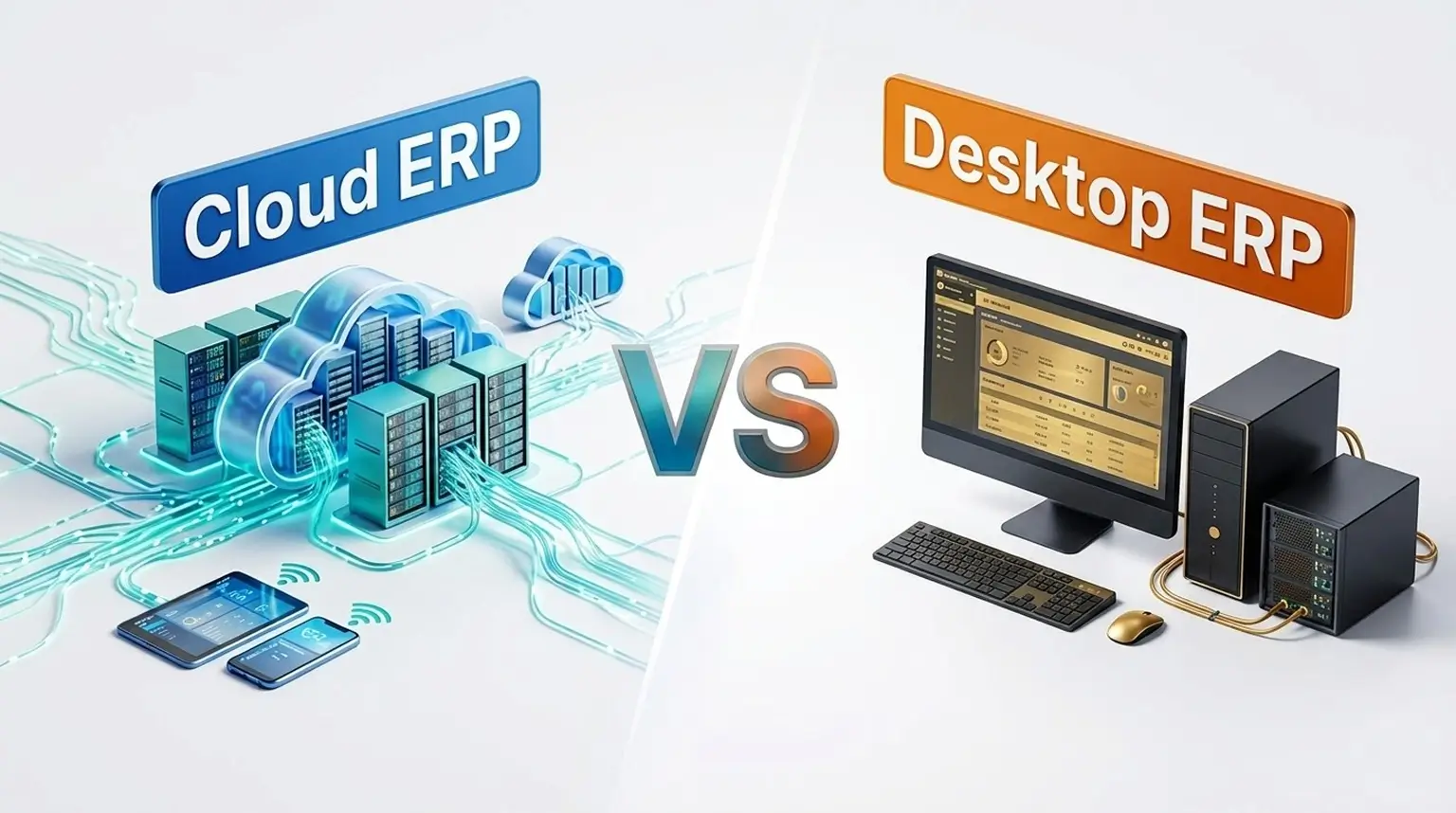
Desktop ERP software is installed locally on a specific computer or local server at your shop. Data is stored on-premise, and access is generally limited to that physical location unless you set up costly VPN infrastructure.
Cloud ERP software runs on remote servers and is accessed through the internet via a browser or app. Your data lives in the cloud, accessible from any device, anywhere — showroom, warehouse, or your phone while you’re traveling.
For jewellers specifically, this distinction matters more than in most industries, because jewellery businesses deal with high-value inventory, multiple branches, karigars working off-site, and owners who are rarely sitting at one desk all day.
What is Cloud ERP Software?
Cloud ERP Software is hosted on secure cloud servers and can be accessed through the internet.
Users can log in from desktops, laptops, tablets, or smartphones and access real-time business information from any location.
Key advantages include:
- Remote accessibility
- Automatic backups
- Real-time reporting
- Multi-branch connectivity
- Lower upfront investment
Therefore, Cloud ERP Software has become increasingly popular among modern businesses looking for flexibility and scalability.
Cloud ERP vs Desktop ERP: Feature-by-Feature Comparison
| Factor | Cloud ERP | Desktop ERP |
|---|---|---|
| Accessibility | Access from any device, anywhere, anytime | Limited to the installed system or location |
| Initial Cost | Lower upfront cost (subscription-based) | Higher upfront cost (one-time license + hardware) |
| Long-term Cost | Predictable monthly or annual subscription fee | Lower recurring cost, but upgrade and maintenance fees add up |
| Data Backup | Automatic, secure off-site backups | Manual backups with risk of data loss due to theft, fire, or hardware failure |
| Multi-Branch Support | Real-time synchronization across all branches | Requires manual reconciliation or expensive networking setup |
| Updates | Automatic updates with minimal or no downtime | Manual updates, often requiring additional charges |
| Security | Encrypted cloud servers, role-based access, vendor-managed security | Security depends entirely on the organization’s local IT infrastructure |
| Internet Dependency | Requires a stable internet connection | Works offline after installation |
| Scalability | Easily add users, branches, and modules as the business grows | Scaling often requires purchasing additional licenses or hardware |
| Customer & Vendor Integration | Seamless integration with e-commerce, payment gateways, WhatsApp, and other business tools | Limited integrations or requires custom development |
When Desktop ERP Still Makes Sense
Desktop ERP isn’t obsolete — it has a real place for certain jewellers:
- Single-location businesses with no plans to expand or go online
- Areas with unreliable internet connectivity, where offline access is non-negotiable
- Jewellers with strict in-house data control preferences, who don’t want any data leaving their premises
- Established businesses already invested in desktop infrastructure and unwilling to migrate
If your jewellery shop fits squarely into one of these categories, a desktop system may still serve you well – at least for now.
Why Most Jewellers Are Moving to Cloud ERP in 2026
The broader trend in the Jewellery ERP software industry is a clear shift toward cloud platforms, driven by a few practical realities:
1. Multi-Branch Operations Are the Normal
As jewellery brands expand into new cities, cloud ERP lets every branch see the same real-time stock, pricing, and customer data — no end-of-day reconciliation needed.
2. Owners Need Visibility on the Go
Jewellery business owners travel for sourcing, exhibitions, and family obligations. Cloud ERP means checking today’s sales, stock levels, or karigar status from a phone, without calling the showroom.
3. Karigars and Job Workers Are Often Off-Site
Cloud systems make it possible to track job-work issued to karigars working from home workshops, updating wastage and production status remotely.
4. Disaster Recovery Matters for High-Value Inventory
A fire, theft, or hardware crash can wipe out a desktop system’s local data permanently. Cloud ERP automatically backs up data off-site, protecting records of gold weight, customer ledgers, and scheme payments.
5. E-commerce and Omnichannel Selling
Jewellers increasingly sell through websites, WhatsApp catalogs, and marketplaces. Cloud ERP integrates far more easily with these channels than desktop systems built for single-location use.
Common Myths About Cloud ERP for Jewellers
“Cloud ERP isn’t secure for sensitive jewellery data.” In reality, reputable cloud ERP vendors use bank-grade encryption, role-based access control, and redundant backups — typically far more secure than an unmonitored desktop system sitting in a back office.
“Cloud ERP is more expensive long-term.” While desktop ERP may look cheaper upfront, hidden costs — hardware upgrades, IT support, manual backup solutions, and license renewals — often make cloud subscriptions more cost-effective over 3-5 years.
“We need internet 24/7 or the business stops.” Most modern cloud jewellery ERP platforms include limited offline billing functionality that syncs automatically once connectivity is restored.
Cloud ERP vs Desktop ERP: Which Should You Choose?
Use this quick decision guide:
- Choose Cloud ERP if: you operate multiple branches or plan to expand, sell online, have karigars working off-site, or want real-time visibility from anywhere.
- Choose Desktop ERP if: you run a single, fixed location, have unreliable internet access, and have no near-term plans for digital expansion.
For the vast majority of growing jewellery businesses in 2026 — manufacturers, wholesalers, and multi-branch retailers alike — cloud ERP is the clear long-term winner, offering the scalability, security, and accessibility that today’s jewellery trade demands
How JSoft ERP Delivers the Best of Cloud for Jewellers
JSoft ERP is a cloud-based jewellery management platform built by Alpha ERP, designed specifically for the weight, purity, and compliance complexities of the jewellery trade. With JSoft ERP, jewellers get:
- Real-time, multi-branch inventory management
- Secure, encrypted cloud storage with automatic backups
- Mobile access for owners and managers on the move
- Seamless billing and POS with GST compliance built in
- Easy integration with e-commerce and customer engagement tools
To understand the full feature set a modern jewellery ERP should include, read our complete guide: Jewellery ERP Software: The Complete 2026 Guide.
Frequently Asked Questions
1. Is cloud ERP safe for storing jewellery customer and inventory data?
Yes. Reputable cloud ERP providers use encrypted servers, role-based access controls, and automated backups, generally offering stronger data protection than unmanaged desktop systems.
2. Can I switch from desktop ERP to cloud ERP without losing my existing data?
Most cloud ERP vendors, including JSoft ERP, offer data migration support to transfer inventory, customer, and transaction records from your existing desktop system.
3. Does cloud ERP work if my showroom has weak internet connectivity?
Many cloud jewellery ERP platforms support offline billing modes that automatically sync data once an internet connection is restored.
4. Is cloud ERP more suitable for small jewellery shops or large manufacturers?
Both. Cloud ERP is modular and scalable, making it suitable for a single small showroom as well as large multi-branch manufacturing operations.
5. What is the typical cost difference between cloud and desktop jewellery ERP?
Desktop ERP often has a higher one-time cost plus ongoing maintenance and hardware expenses, while cloud ERP uses predictable subscription pricing with updates and backups included.
Final Thoughts
The choice between cloud and desktop ERP isn’t just a technical decision — it shapes how your jewellery business will operate, scale, and protect its most valuable data for years to come. While desktop ERP can still work for very small, single-location setups, cloud ERP has become the standard for jewellers serious about growth, security, and real-time control over their business.
Want to see a cloud jewellery ERP in action? Book a free JSoft ERP demo and experience how Alpha ERP’s cloud-first platform can transform the way you run your jewellery business.