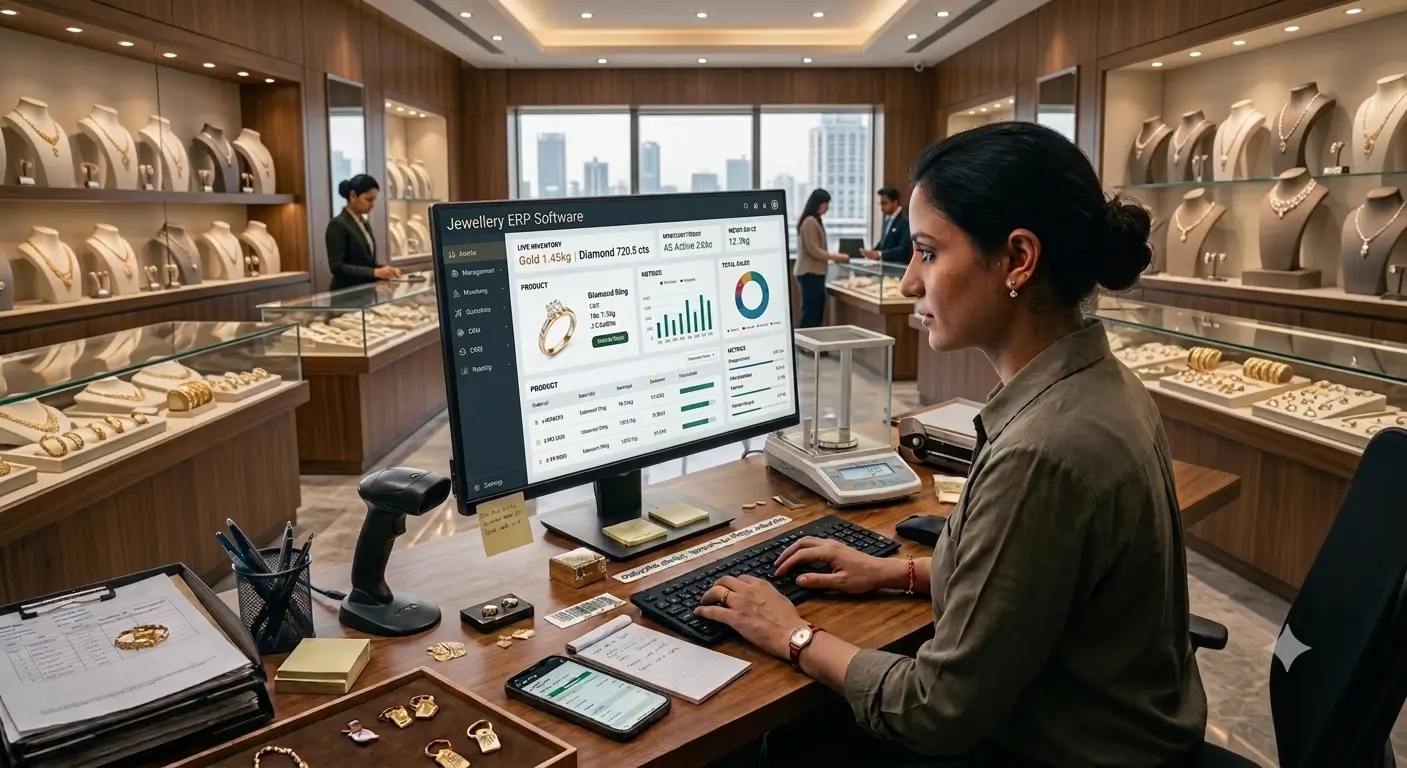
The jewellery industry runs on precision – precise weights, precise purity, precise margins. Yet thousands of jewellers still manage their business with spreadsheets, paper registers, and disconnected billing tools. In 2026, that gap is closing fast as more manufacturers, wholesalers, and retail jewellers adopt jewellery ERP software to run their entire operation – from raw gold procurement to customer billing – on a single platform.
This guide breaks down everything you need to know: what jewellery ERP software actually does, why generic ERP systems fail jewellers, the must-have features for 2026, and how to choose the right solution for your business.
What Is Jewellery ERP Software?
Jewellery ERP software is an industry-specific enterprise resource planning system built to handle the unique operational complexities of the jewellery trade – things no generic ERP or accounting tool is designed for, such as:
- Gold, silver, platinum, and diamond purity and weight tracking (gross weight, net weight, stone weight)
- Real-time metal rate management linked to daily market rates
- Making charges, wastage, and labour cost calculations
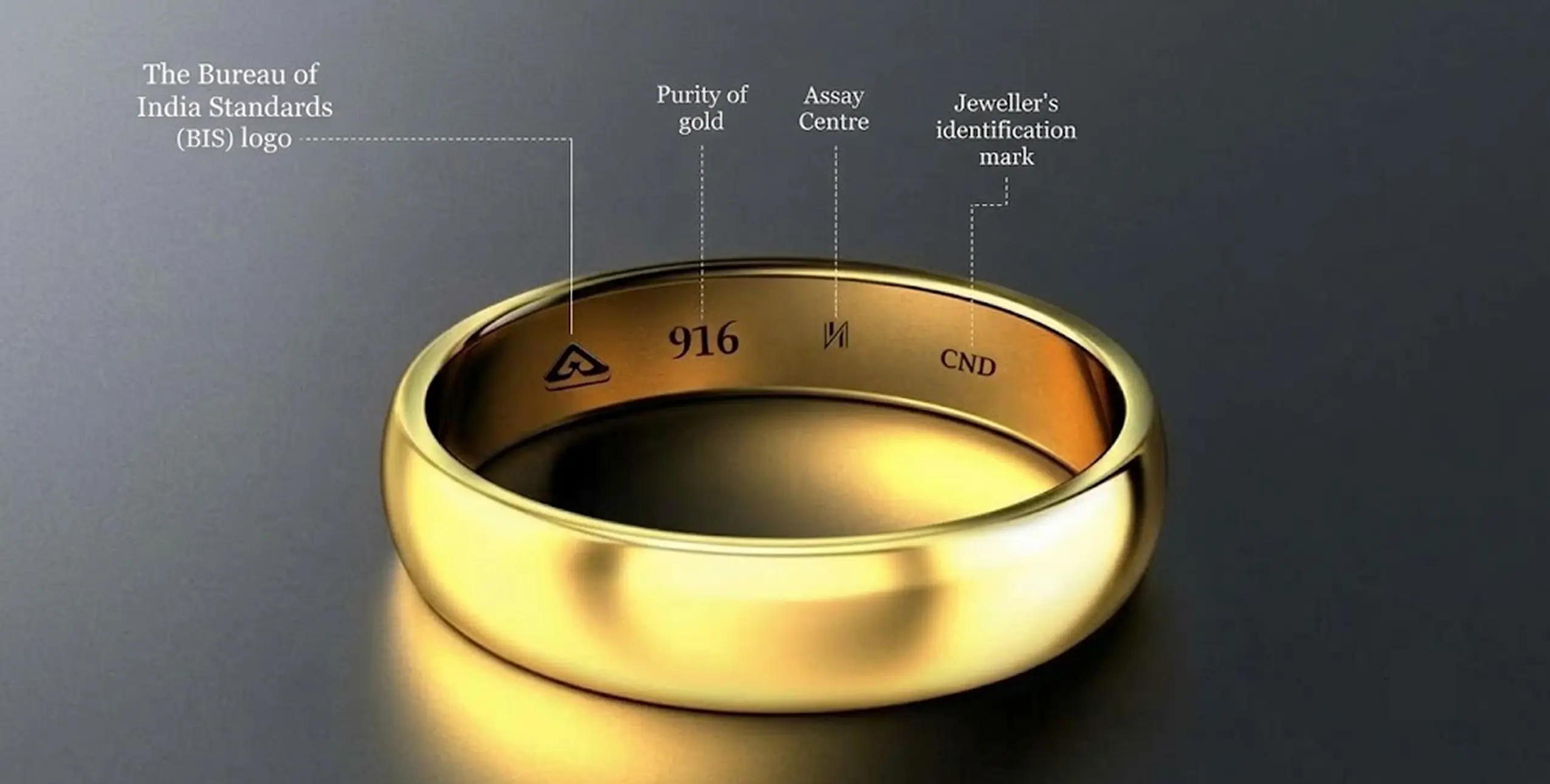
- Hallmarking and BIS compliance documentation
- Karigar (artisan) and job-work management
- Old gold exchange and scheme/installment management
- Branch-to-branch stock transfer and consignment tracking
Unlike a standard ERP or accounting package, a true jewellery ERP solution is built around weight and purity as core data fields — not as an afterthought.
Why Jewellers Are Moving to ERP Software in 2026
Several industry shifts are pushing jewellery businesses toward dedicated ERP systems this year:
1. Tighter compliance requirements – GST, hallmarking, and BIS norms demand accurate, auditable records.
2. Rising gold prices – Even small calculation errors translate into real financial losses.
3. Omnichannel retail – jewellers now sell across showrooms, websites, and marketplaces, requiring unified inventory.
4. Customer expectations – buyers expect instant estimates, digital invoices, and loyalty/scheme transparency.
5. Multi-location growth – as jewellery brands expand to new cities, manual reconciliation across branches becomes unmanageable.
Core Modules Every Jewellery ERP Should Have
1. Inventory & Stock Management
Track every piece by weight, purity, design code, and stone details — across showroom, warehouse, and karigar locations — in real time.
2. Manufacturing & Job Work Management
Manage the full production cycle: raw metal issue to karigars, wastage tracking, polishing/repair stages, and finished goods receipt.
3. Billing & POS
Generate GST-compliant invoices with automatic metal-rate fetch, making charges, old gold exchange adjustment, and EMI/scheme billing — all from one screen.
4. CRM & Loyalty
Track customer purchase history, birthdays/anniversaries, scheme subscriptions, and send automated reminders to boost repeat sales.
5. Multi-Branch & E-commerce Integration
Sync stock and pricing across multiple stores and online channels so customers see accurate availability everywhere.
6. Accounting & Compliance
Built-in GST filing support, hallmarking records, and audit-ready financial reports — reducing dependency on external accountants for routine compliance.
7. Analytics & Reporting
Dashboards for fast/slow-moving designs, karigar efficiency, branch performance, and profitability by category.
Benefits of Implementing a Jewellery ERP System
- Eliminates manual errors in weight, purity, and pricing calculations
- Reduces inventory shrinkage with real-time, item-level stock visibility
- Speeds up billing at peak hours (festive season, weddings)
- Improves cash flow visibility with consolidated multi-branch reporting
- Strengthens compliance with built-in GST and hallmarking documentation
- Enables data-driven decisions through actionable sales and inventory analytics
- Scales with growth — onboarding a new branch takes days, not months
How to Choose the Right Jewellery ERP Software
When evaluating a jewellery management software, ask vendors these questions:
| Criteria | Why It Matters |
|---|---|
| Industry specialization | Generic ERPs lack weight/purity-based logic |
| Cloud vs on-premise | Cloud ERP enables remote, multi-branch access |
| Integration support | Should connect with e-commerce, accounting, payment gateways |
| Scalability | Must support growth from single store to multi-branch chain |
| Customer support & training | Onboarding quality determines adoption success |
| Data security | Jewellery data is high-value; insist on encryption and backups |
| Mobile accessibility | Owners need real-time visibility on the go |
The Future of Jewellery ERP: What’s New in 2026
- AI-assisted demand forecasting for design and metal procurement
- Automated metal-rate sync from live market feeds into billing
- WhatsApp and chatbot-based customer engagement built into CRM modules
- Predictive analytics for karigar productivity and wastage control
- Deeper integration with e-commerce and marketplaces for omnichannel jewellers
Cloud-based, AI-enabled jewellery ERP platforms are no longer a “nice to have” — they’re becoming the baseline expectation for any jewellery business that wants to compete in 2026 and beyond.
Why Choose JSoft ERP
JSoft ERP is purpose-built for the jewellery trade, combining inventory, manufacturing, billing, CRM, and compliance into one intuitive platform. Designed by the team at Alpha ERP, JSoft ERP helps jewellery manufacturers, wholesalers, and retailers replace fragmented spreadsheets and legacy software with a single, scalable system that grows with their business.
Explore how JSoft ERP can streamline your jewellery business:
- Jewellery Inventory Management Software
- Jewellery Billing & POS Software
- Jewellery Manufacturing & Job Work Module
- Request a Free Demo
Why Choose JSoft ERP
1. What is the cost of jewellery ERP software in 2026?
Pricing varies based on number of users, branches, and modules required — ranging from affordable plans for single-store jewellers to enterprise pricing for multi-branch manufacturers. Most vendors, including JSoft ERP, offer customized quotes after understanding business scale.
2. Is jewellery ERP software suitable for small jewellery shops?
Yes. Modern cloud-based jewellery ERP solutions are modular, so small shops can start with core billing and inventory features and add manufacturing or CRM modules as they grow.
3. Can jewellery ERP software integrate with my existing accounting software?
Most reputable jewellery ERP systems offer integrations with popular accounting tools and support GST-compliant exports, minimizing disruption to existing workflows.
4. How long does it take to implement a jewellery ERP system?
Implementation typically takes a few days to a few weeks, depending on data migration volume and the number of branches — significantly faster than generic ERP rollouts due to industry-specific templates.
5. Is my jewellery business data secure on a cloud ERP?
Reputable jewellery ERP providers use encrypted cloud infrastructure, role-based access control, and regular backups to protect sensitive business and customer data.
Final Thoughts
Jewellery businesses that adopt the right ERP system in 2026 gain more than operational efficiency — they gain accuracy, compliance confidence, and the scalability needed to grow across branches and channels. Whether you’re a single-showroom retailer or a multi-location manufacturer, investing in a dedicated jewellery ERP software like JSoft ERP positions your business for sustainable, profitable growth.
Ready to see it in action? Book a free JSoft ERP demo today and discover how Alpha ERP’s jewellery-focused platform can transform your operations.