Diwali falls on November 8, 2026. After the Diwali and festive period, India’s wedding season moves into one of its busiest phases, with auspicious marriage dates beginning later in November.
Devutthana Ekadashi falls on November 20, 2026. Several marriage muhurats follow from November 21 onward, with additional auspicious dates in late November and early December. Exact wedding dates vary by region, tradition and local Panchang.
For jewellery businesses, this means the preparation window is already open.
Families begin visiting jewellery showrooms well before the wedding date. They shop for bridal gold sets, matching necklace and earring sets, bangles, diamond jewellery and investment gold. Many families also make several showroom visits before finalising their purchases.
Wedding season is different from Dhanteras. Transaction values are often higher. Custom orders are more common. Families may also coordinate purchases across multiple branches and cities.
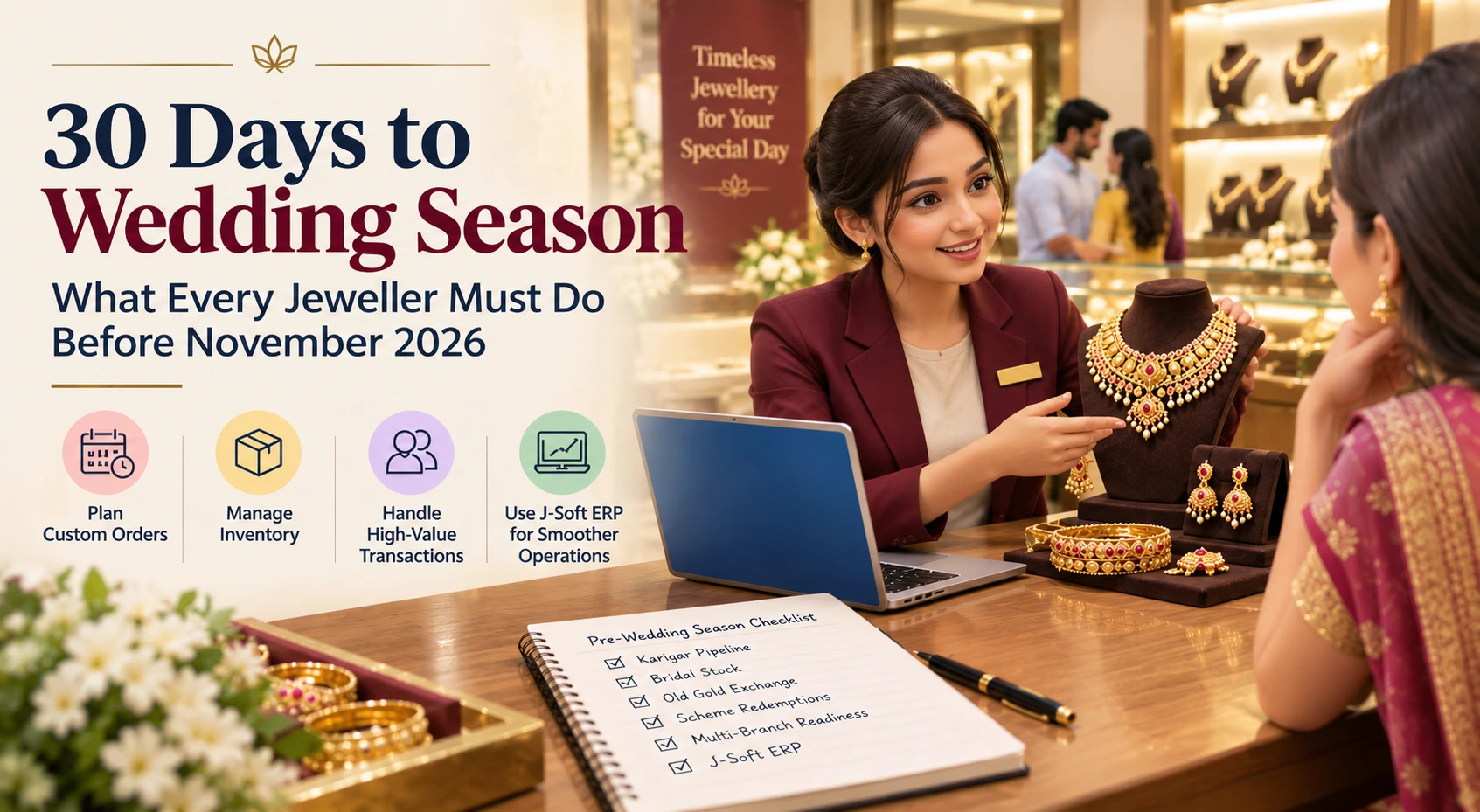
If your showroom is not operationally prepared before the wedding rush begins, you will feel the pressure at the counter. This guide covers what your jewellery business should prepare now — and how J-Soft ERP can help.
Why Wedding Season Is Different from Dhanteras
During Dhanteras, customers often choose from available display stock. Billing is usually fast and transaction volume is high.
Wedding purchases work differently.
First, custom orders are common. Families commission bridal sets such as necklaces, earrings, maang tikka, bajubandh, payal and matching bangles. These orders may require weeks of Karigar work.
Second, transaction values are higher. A bridal purchase can involve significant gold weight, making charges, stones and old gold exchange. Every component must be recorded accurately.
Third, families may shop across cities. A bride’s family may visit one showroom while another family member visits a different branch. Multi-branch stock visibility becomes important when customers want matching pieces or specific designs.
7 Things Jewellers Should Do Before Wedding Season
1. Lock In Your Karigar Pipeline Now
Custom bridal jewellery takes time. A heavy gold necklace set can need several weeks of Karigar work. Stone-setting and enamel work can take even longer.
For weddings scheduled for late November and December, assign custom orders to Karigars well in advance.
Right now, review your Karigar outstanding balances. Close pending festive-season job work. Then plan Karigar capacity for upcoming wedding orders.
J-Soft ERP tracks gold issued to Karigars. You can monitor weight, purity, expected return date and agreed wastage from one system.
This gives your team better control over high-value bridal orders.
2. Stock Bridal Categories Strategically
Wedding demand is different from festive demand. Families typically look for:
- Heavy gold necklace sets — the centrepiece of the bridal trousseau
- Matching earrings — often purchased with the necklace
- Gold bangles — multiple pairs at different weights
- Maang tikka and maatha patti — popular in several Indian wedding traditions
- Nose rings and nath — important in many regional traditions
- Diamond and studded jewellery — increasingly common in modern bridal collections
- Investment gold — coins and bars purchased alongside jewellery
Review your J-Soft ERP inventory to identify the bridal categories that sold fastest during the previous wedding season.
Then plan your vendor orders before the Diwali period affects your procurement and logistics schedules.
3. Prepare for High-Value Old Gold Exchange
Wedding families often exchange old jewellery while purchasing new bridal pieces.
These exchanges can involve significant gold weight. Even a small valuation error can make a meaningful difference on a high-value transaction.
Your team should verify the weight, purity, applicable rate and exchange value for every old gold transaction.
J-Soft ERP’s old gold exchange module calculates the exchange value using the applicable metal rate. It also maintains an audit trail and adjusts the exchange amount against the new purchase invoice.
This reduces manual calculations and helps your team handle high-value exchanges more accurately.
4. Handle Scheme Redemptions Before They Stack Up
Gold saving schemes can generate a wave of redemptions during the wedding-shopping period.
Customers who have paid monthly instalments may use their accumulated amount toward wedding jewellery. If your team manages these accounts manually, redemption processing can slow down busy billing counters.
J-Soft ERP’s scheme management module tracks instalments and redemption values. Your team can apply the eligible amount to the customer’s purchase invoice.
Before the wedding rush begins, run a report of schemes due for redemption in October, November and December.
5. Set Up Advance Booking and Token Management
Wedding jewellery purchases often involve several showroom visits.
A family may select a design, pay a token amount, request a modification and return later for final billing. Every part of this process needs to be tracked.
J-Soft ERP supports advance booking entries with token payments linked to customer orders.
Your sales team can check the order status, advance amount and balance due. When the customer returns, the advance can be adjusted against the final bill.
This is particularly useful when customers travel from another city.
6. Enable Multi-Branch Stock Visibility
Wedding families may purchase jewellery from more than one branch.
For example, a customer may select a necklace in Jaipur and ask a family member in Ahmedabad to check for matching earrings.
J-Soft Cloud ERP gives branches visibility into stock across showrooms. Your team can check availability before asking the customer to travel.
They can also initiate an inter-branch transfer when a specific piece is available at another location.
For jewellery businesses with multiple showrooms, this can make stock management much easier during the wedding rush.
7. Activate JewelDeal for Wedding Families
Wedding families increasingly research jewellery before visiting a showroom.
They browse designs online, share images with relatives and shortlist pieces before making a purchase.
JewelDeal — J-Soft ERP’s B2C jewellery app — gives customers a digital catalogue of your inventory.
Customers can browse and shortlist designs before visiting your showroom. Because JewelDeal connects with J-Soft ERP inventory, your digital catalogue can reflect available stock.
This creates another path from online browsing to showroom visits.
The HUID Compliance Angle for Wedding Season
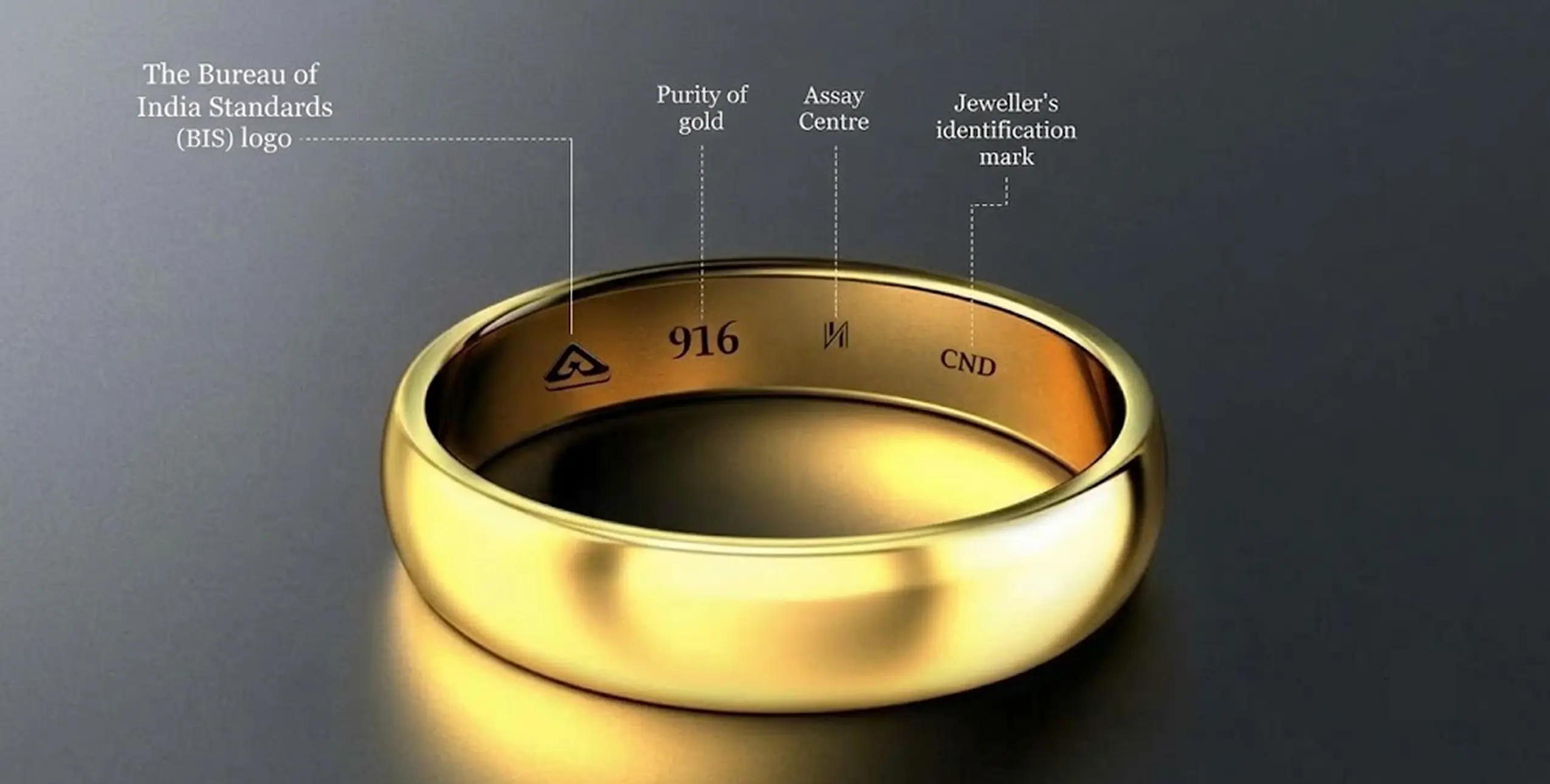
Bridal jewellery often includes high-purity gold. Customers purchasing high-value pieces may also want clear hallmarking information and documentation.
Families spending several lakhs on jewellery may ask your team about the HUID on their hallmarked pieces. Some customers may also verify hallmark details through the BIS CARE app.
Your showroom team should therefore be ready to provide accurate HUID information during busy billing hours.
J-Soft ERP records HUID information for hallmarked jewellery at stock inward. It can also print the HUID on the customer invoice.
This reduces the need for manual entry at the billing counter.
HUID Hallmarking Compliance Made Easy with J-Soft ERP — coming soon on the J-Soft ERP blog.
Wedding Season GST Compliance: What to Check
Wedding jewellery invoices can include several components. These may include gold, making charges and gemstones.
Your billing system should apply the appropriate GST treatment to each applicable component and generate a properly itemised invoice.
For current GST rules and rates, always verify the applicable provisions through the GST Council’s official portal.
J-Soft ERP helps automate GST and HSN information during billing. This reduces manual data entry and helps your team maintain consistent invoicing during high-volume periods.
Frequently Asked Questions
Q.1: When does the 2026 wedding season begin?
There is no single nationwide start date for India’s wedding season. In 2026, Diwali falls on November 8. Devutthana Ekadashi falls on November 20, and auspicious marriage dates follow in several regional Panchang calendars. For example, marriage muhurats are listed on November 21 and November 24–26, with additional dates in early December. Exact dates vary by region and tradition.
Q.2: When should jewellers start preparing for the 2026 wedding season?
Preparation should begin well before the first major wedding dates. September and October are important for reviewing Karigar capacity, ordering bridal stock, checking scheme accounts and preparing advance bookings.
Q.3: Can J-Soft ERP track advance bookings for custom bridal orders?
Yes. J-Soft ERP supports advance booking entries with token payments linked to specific customer orders. Your team can track order status, advance paid, balance due and other order details from the system.
See J-Soft ERP’s retail features for more information.
Q.4: What if a family wants to buy pieces from two different branches?
J-Soft Cloud ERP gives branches visibility into showroom inventory. Your team can check availability, coordinate transfers and help customers find matching pieces across locations.
Q.5: Can JewelDeal help before the 2026 wedding season?
Yes. JewelDeal connects with your existing J-Soft ERP inventory. Customers can browse your jewellery catalogue digitally before visiting your showroom.
Conclusion
Diwali is on November 8, 2026. The major post-Diwali wedding period follows later in November, with marriage muhurats beginning after Devutthana Ekadashi in several regional calendars.
That gives jewellery businesses a clear preparation window.
Wedding season requires more than fast billing. It requires Karigar pipeline management, bridal stock planning, advance booking, multi-branch stock visibility, accurate old gold exchange and HUID-ready invoicing.
J-Soft ERP brings these operations together in one system.
Start preparing now. The 2026 wedding shopping rush is approaching.