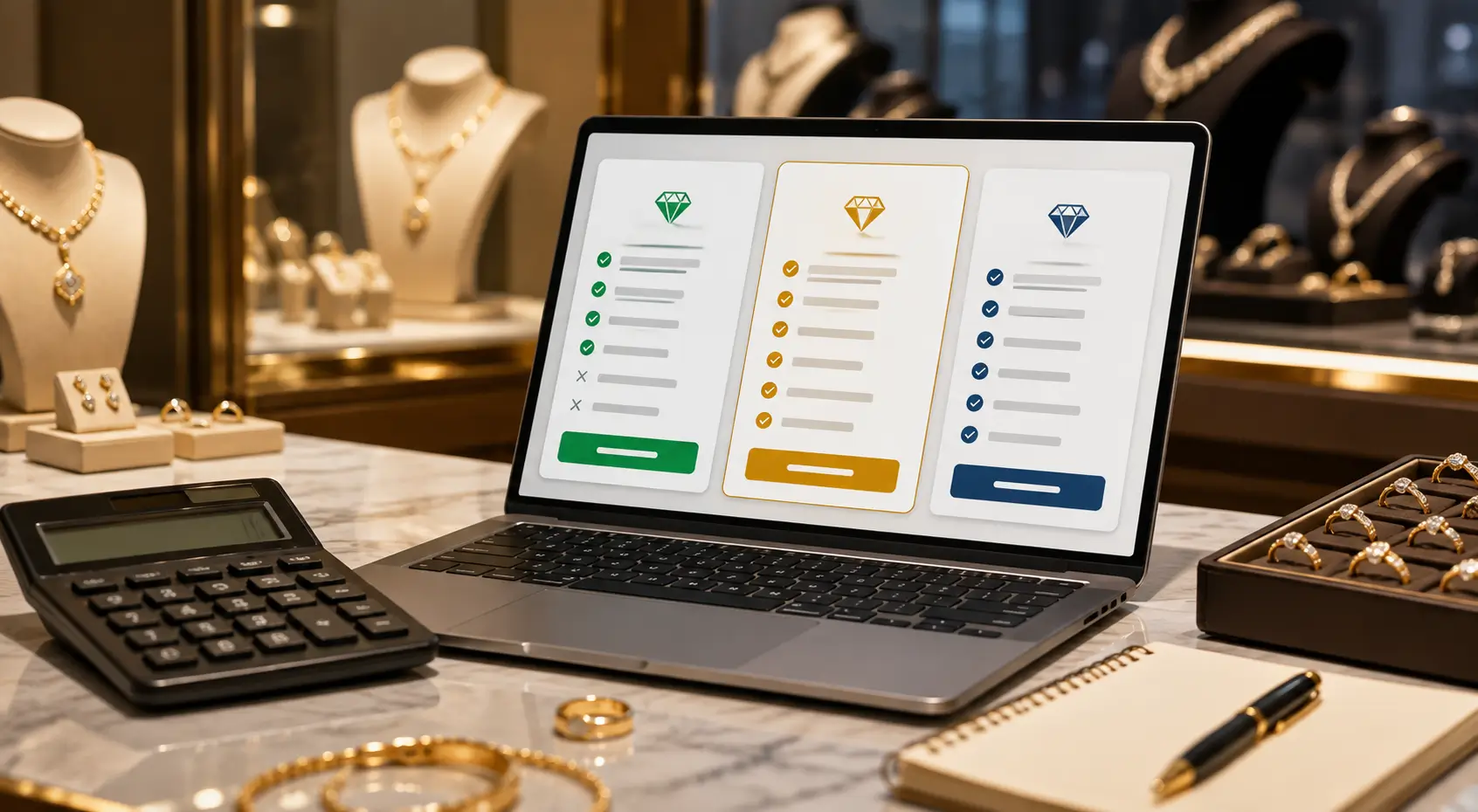
JSoft ERP pricing plans are designed specifically for jewellery retailers, wholesalers, and manufacturers across India. Whether you run a single store or a multi-branch chain, our plans give you the right tools at the right cost.
One of the most common questions jewellers ask when exploring ERP software is: How much will it cost?
The honest answer is that J-Soft ERP pricing is not a single fixed number , it is a customized proposal based on your specific business size, the modules you need, and whether you choose cloud or desktop deployment. This is the right approach: a single-counter jeweller in Surat and a multi-showroom manufacturer in Jaipur need very different software configurations – and paying for the same package would be wrong for both.
This guide explains how J-Soft ERP pricing works, what factors determine your cost, what every plan includes, and how to evaluate whether the investment makes business sense – before you speak to a single salesperson.
How JSoft ERP Pricing Is Structured
JSoft ERP pricing plan follows a customised pricing model based on four main variables:
1. Deployment: Cloud ERP vs Desktop ERP
This is the most important pricing decision you will make.
Desktop ERP (On-Premise)
- One-time software licence fee
- Installed on your own hardware or server
- Annual Maintenance Contract (AMC) covers updates and support
- Data stays on your premises – preferred by businesses with data security concerns
- Best for: established single or few-location jewellery businesses
Cloud ERP
- Monthly or annual subscription
- Access from anywhere – showroom, home, travel
- No server hardware needed
- Automatic updates and cloud backups included
- Best for: multi-branch businesses, those wanting remote access and minimal IT setup
2. Business Type: Retail, Wholesale, or Manufacturing
J-Soft ERP serves three distinct segments of the jewellery trade – and each has different module requirements:
Retail – POS billing, purity-wise inventory, customer loyalty, HUID compliance, old gold exchange, scheme management
Wholesale – Bulk billing, dealer management, consignment tracking, B2B ordering via JewelDeal app, E-way bill generation
Manufacturing – Karigar management, BOM (Bill of Materials), wastage accounting, diamond lot tracking, casting and polishing process management
Your pricing reflects the modules appropriate to your business type – not a generic package.
3. Number of Users and Billing Counters
ERP pricing typically accounts for the number of staff who will actively use the system – billing operators, store managers, accounts staff, and admin users. More users means more licences, which affects the overall cost.
4. Number of Branches or Showrooms
Each additional branch adds to the deployment scope. Multi-branch businesses need centralized inventory visibility, inter-showroom transfer management, consolidated reporting, and centralized metal rate management – all available in J-Soft ERP’s multi-branch module.
What Is Included in Every J-Soft ERP Plan
Regardless of business size or segment, every J-Soft ERP deployment includes:
✓ Gold, silver & diamond billing – purity-wise pricing, making charges, stone valuation
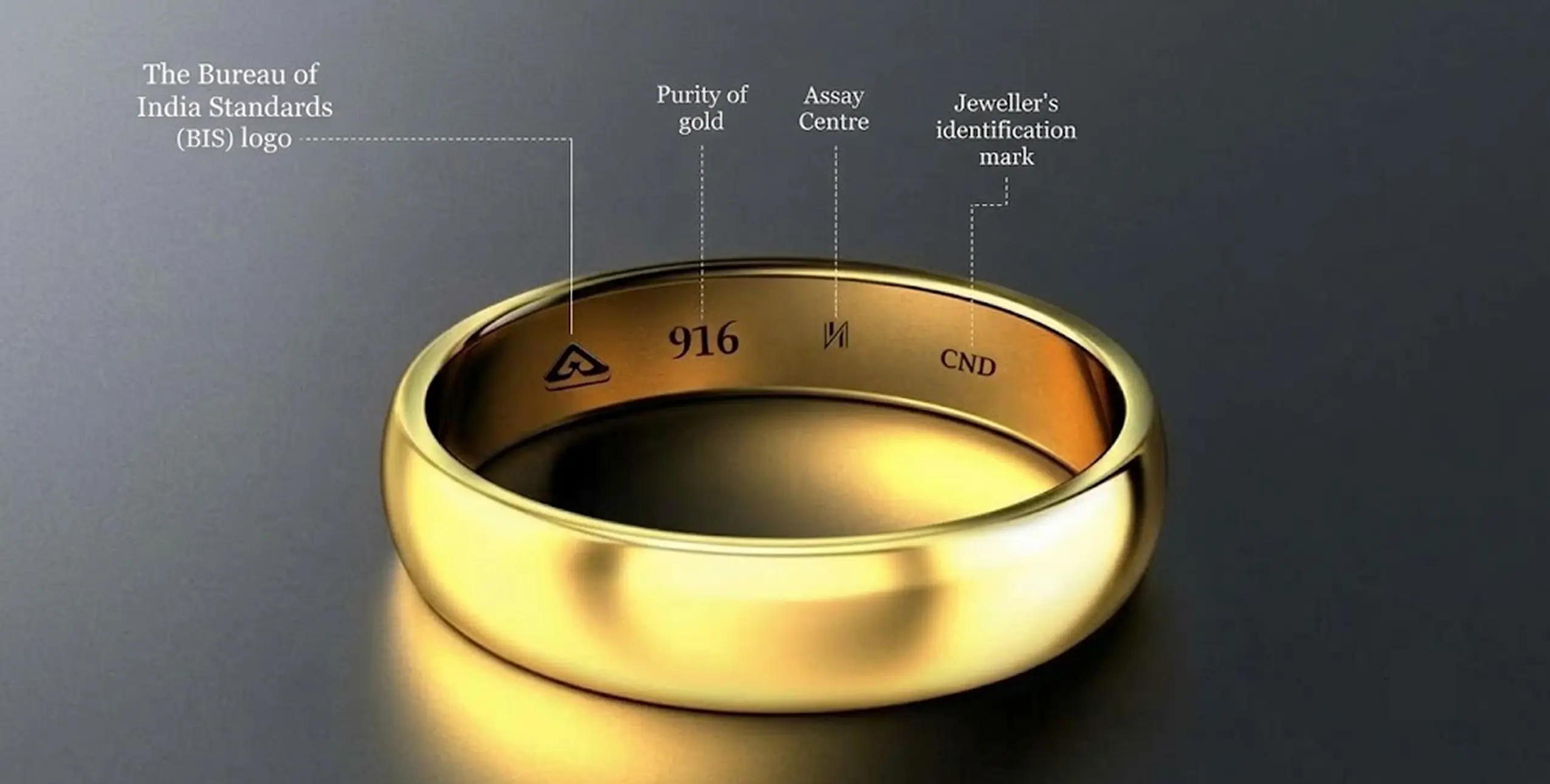
✓ HUID hallmarking compliance – capture, track, and print HUID on every invoice
✓ GST-compliant invoicing – multi-rate GST with correct HSN codes, GSTR-ready reports
✓ Old gold exchange workflow – value, document, and adjust old metal transactions
✓ Purity-wise inventory management – real-time stock by metal, purity, and weight
✓ Purchase order management – raise POs, receive against PO, vendor tracking
✓ Basic financial accounting – ledgers, accounts payable/receivable, bank reconciliation
✓ Customer database – purchase history, loyalty tracking, communication records
✓ Standard reports – sales, stock, and GST reports
✓ Implementation support – setup, data migration, and initial training
✓ After-sales support – via AMC (Desktop) or subscription (Cloud)
Optional Modules That Affect Pricing
Beyond the core platform, these modules are activated based on your business needs:
| Module | Who Activates It |
|---|---|
| Karigar (Job Work) Management | Manufacturers and retailers with repair/custom work |
| Scheme Management | Retailers running gold savings or instalment schemes |
| Customer Loyalty & Gift Vouchers | Retail businesses focused on repeat customers |
| Payroll & HRMS | Businesses with 5+ staff |
| Business Intelligence Dashboard | Businesses needing advanced performance analytics |
| RFID Integration | High-volume retailers and warehouses |
| E-way Bill Generation | Wholesale businesses transporting goods |
| JewelDeal B2B App | Wholesalers managing dealer orders via mobile |
| B2C E-commerce Integration | Retailers with an online sales channel |
| API Integrations | Businesses connecting with banks, payment gateways, Shopify, WooCommerce |
Each module you activate adds to the deployment scope – and to the value the system delivers.
💡Not sure which modules your jewellery business needs? Our team will walk you through a demo tailored to your specific business type – retail, wholesale, or manufacturing. Book a Free Demo →
Total Cost of Ownership for Jsoft ERP Pricing Plan
Looking only at the licence or subscription fee gives an incomplete picture. A proper Total Cost of Ownership (TCO) assessment covers:
1. One-Time Costs
- Implementation, configuration, and data migration
- Hardware (for Desktop ERP) – server, barcode scanners, label printers, POS terminal
- Initial staff training
2. Ongoing Costs
- AMC (for Desktop ERP) – software updates, new features, technical support
- Subscription (for Cloud ERP) – all-inclusive
- Additional user licences as the team grows
What You Save – The Other Side of the Equation
This is where most businesses underestimate ERP value:
Billing accuracy: Manual jewelry billing errors – wrong making charges, incorrect purity pricing, missed GST rates – cost money on every transaction. ERP eliminates these systematically.
Wastage control: For manufacturers working with Karigars, untracked excess wastage can represent significant metal value lost over a year. ERP catches discrepancies on every job work closure.
HUID compliance: A BIS Hallmarking Guidelines compliance failure – missing HUID on invoices, incorrect hallmarking records – carries regulatory risk. ERP automates this at zero additional operational cost.
Stock accuracy: Purity-wise inventory discrepancies – gold counted as 22K when it is 18K, for example – distort your stock valuation and purchasing decisions. Real-time ERP tracking prevents this.
Scheme management: Customer gold saving schemes managed manually are prone to calculation errors and disputes. ERP automates instalment tracking, redemption, and scheme-end calculation.
Key Cost Factors to Consider
Single Counter / Small Retailer Core POS, inventory, GST billing, HUID tracking, and old gold exchange. Entry-level deployment – the most affordable configuration. Focused on accuracy, compliance, and replacing manual billing.
Established Retailer (1–3 Showrooms) Adds loyalty programs, scheme management, payroll, and multi-branch inventory. Mid-tier deployment with meaningful operational benefits across customer management and staff administration.
Multi-Branch Retailer or Wholesaler Full multi-branch management, centralized rate control, inter-showroom transfers, B2B wholesale billing, JewelDeal app, and advanced reporting. Enterprise configuration with corresponding pricing.
Jewellery Manufacturer Karigar management, BOM, process tracking (casting, polishing, setting), diamond lot management, and wastage accounting. Manufacturing-specific modules add significant operational value – and pricing reflects the depth of functionality.
J-Soft ERP vs Generic ERP for Jewelry: A Cost Reality Check
Many jewellers compare J-Soft ERP pricing to Tally – which they may already be using. The comparison is misleading for one reason: Generic ERP is not jewelry software.
Generic ERP handles accounts and basic invoicing. It does not handle:
- Purity-wise gold and silver inventory
- Making charges calculation
- HUID tracking and invoice printing
- Karigar accounts
- Old gold exchange
- Stone and diamond valuation
- Jewelry-specific GST treatment (multi-rate on a single invoice)
To get these functions from Generic ERP, you would need to build custom add-ons – which typically cost more than J-Soft ERP and still don’t match the purpose-built capability.
The correct comparison is not J-Soft ERP vs Generic ERP. It is J-Soft ERP vs Generic ERP+ custom development + manual processes for everything Generic ERP can’t do.
How to Get Your J-Soft ERP Quote
Getting accurate, transparent pricing for J-Soft ERP takes three steps:
- Share your business details – type (retail/wholesale/manufacturing), number of locations, approximate staff count, key requirements
- Demo session – see J-Soft ERP running for your specific business segment with a real walkthrough of the features you need
- Custom proposal – receive a detailed quote with clear line items for license/subscription, modules, implementation, and support
No hidden charges. No surprise add-ons. Every cost is outlined before you commit.
View J-Soft ERP Pricing Plans →Book a Free Demo →
Frequently Asked Questions
1. Is J-Soft ERP available for small jewellry shops, not just large businesses?
Yes. J-Soft ERP is scaled for businesses of every size – from single-counter jewellers to multi-city manufacturers. Pricing and module selection are calibrated to match your scale.
2. Does J-Soft ERP charge extra for HUID compliance features?
HUID tracking and invoice printing are core features included in every J-Soft ERP deployment – not an add-on. Given that HUID compliance is mandatory for all jewellers in India, it is built into the base platform.
3. What is the difference between Desktop and Cloud ERP in terms of ongoing cost?
Desktop ERP has a one-time license fee plus an annual AMC (typically a percentage of the license value). Cloud ERP has a recurring subscription but no hardware costs. For businesses with multiple branches, Cloud ERP typically has a lower total cost over 3–5 years.
4. Can I migrate my existing data (customer records, stock, accounts) to J-Soft ERP?
Yes. Data migration from existing systems – including Tally, Excel, or legacy software – is handled by the J-Soft ERP implementation team as part of the onboarding process.
5. Does the pricing include the JewelDeal B2B app?
JewelDeal is an optional add-on module for wholesale businesses. It is discussed and included in your quote if relevant to your operations.
Conclusion
J-Soft ERP pricing is not a fixed number – it is a customized proposal built around your business. What is fixed is the value proposition: purpose-built jewellery ERP that handles purity-wise billing, HUID compliance, Karigar accounts, old gold exchange, scheme management, and GST – without the customization costs of a generic system.
For 5,000+ jewellry businesses across India, J-Soft ERP has been the system that replaced scattered spreadsheets and manual registers with one accurate, auditable, compliant platform.